
Groin Pain in Pickleball Players: What Is Osteitis Pubis?
Deep groin or pubic pain in pickleball, tennis, or golf players may be osteitis pubis rather than a simple strain. Here's how it's diagnosed and treated.
If you're a pickleball, tennis, or golf player in Southwest Florida with deep, aching pain at the front of the pelvis or groin that worsens with pushing off, twisting, or sprinting to the ball, you may be dealing with osteitis pubis or a related pubic-related groin pain condition. It's a real but often confusing diagnosis, and getting it right matters because the treatment path depends on distinguishing it from hip, adductor, or hernia-related causes.
What osteitis pubis actually is
Osteitis pubis refers to irritation and stress at the pubic symphysis, the joint at the front of the pelvis where the left and right pubic bones meet. It develops from repetitive loading, particularly cutting, pivoting, and rapid direction changes, which is exactly the kind of movement pattern common in pickleball, tennis, and golf swings. Pain is usually felt directly over the pubic bone or deep in the groin, and it can radiate to the inner thigh or lower abdomen. It often builds gradually rather than appearing after a single injury.
Why groin pain is often misdiagnosed
Anterior pelvic and groin pain in athletes can come from several overlapping structures: the pubic symphysis itself, the adductor tendons, the hip joint, or occasionally a sports hernia. These conditions can coexist, and imaging findings don't always match symptoms cleanly. A thorough history and physical exam, sometimes paired with targeted imaging, is usually more useful than imaging alone. This is part of why groin pain in active adults benefits from an evaluation by someone comfortable examining the hip and pelvis specifically, rather than assuming it's a simple muscle strain.
How it's managed
First-line treatment is conservative and typically includes:
Relative rest from the aggravating sport, with a gradual, structured return
A progressive strengthening program targeting the hip, adductors, and core
Addressing movement patterns that overload the pubic symphysis, such as pivoting mechanics in pickleball or golf
Anti-inflammatory strategies for symptom control during the early phase
Most athletes improve with a well-structured rehab program, though progress can be slower than people expect, sometimes weeks to a few months depending on severity and how long symptoms were present before treatment started. There isn't a single test that tells us exactly when someone is ready to return to full sport; that decision is based on symptom resolution, strength testing, and tolerance of sport-specific movements.
For cases that plateau with rehab alone, ultrasound-guided injections can be a useful intermediate step to help calm symptoms and support continued rehab progress. Some patients also ask about PRP for persistent tendon-related groin pain, though evidence in this specific area is still developing and it's not a first-line treatment for everyone. Surgery is reserved for a smaller group of athletes who don't improve despite adequate conservative treatment, and that decision involves careful case-by-case discussion.
In my clinic, I often see this exact picture in pickleball, tennis, and golf players, and I'll say plainly that osteitis pubis can be difficult to both diagnose and treat. The exam and history matter more than any single scan. My typical starting point is physical therapy focused on hip, adductor, and core strengthening along with correcting the movement patterns that keep loading the pubic symphysis. Patience matters here; this isn't an injury that responds to a quick fix, and rushing back to full-speed play before the joint has settled tends to set people back.
When to see a doctor
You should get groin or pubic pain evaluated rather than pushing through it if you notice any of the following:
Pain that persists beyond a couple of weeks despite rest
Pain that's sharp or worsens with sneezing, coughing, or straining (which can suggest a hernia rather than osteitis pubis)
Groin pain paired with hip stiffness or a pinching sensation, which may point toward the hip joint itself
Pain intense enough to change how you walk
Because pickleball has become such a common cause of overuse groin and hip pain in Naples, an early, accurate diagnosis often shortens the whole recovery process. This is one of the more frequently misunderstood injuries I see in active adults across Southwest Florida.
Common questions
Is osteitis pubis the same as a groin strain?
No. A groin strain typically involves the adductor muscles or tendons, while osteitis pubis involves the pubic joint itself. They can occur together, which is part of why the diagnosis can be tricky without a focused exam.
Can I keep playing pickleball with groin pain?
Some mild cases tolerate modified play, but continuing to push through worsening or persistent pain generally prolongs recovery. It's reasonable to get evaluated before deciding how much to modify your activity.
Will imaging show what's wrong?
Imaging can help, but findings don't always match symptoms cleanly, and mild changes are common even in athletes without pain. A physical exam paired with your history is usually the more reliable starting point.
If you're dealing with groin, hip, or pelvic pain that isn't improving, same-day walk-in visits are available to get evaluated properly.
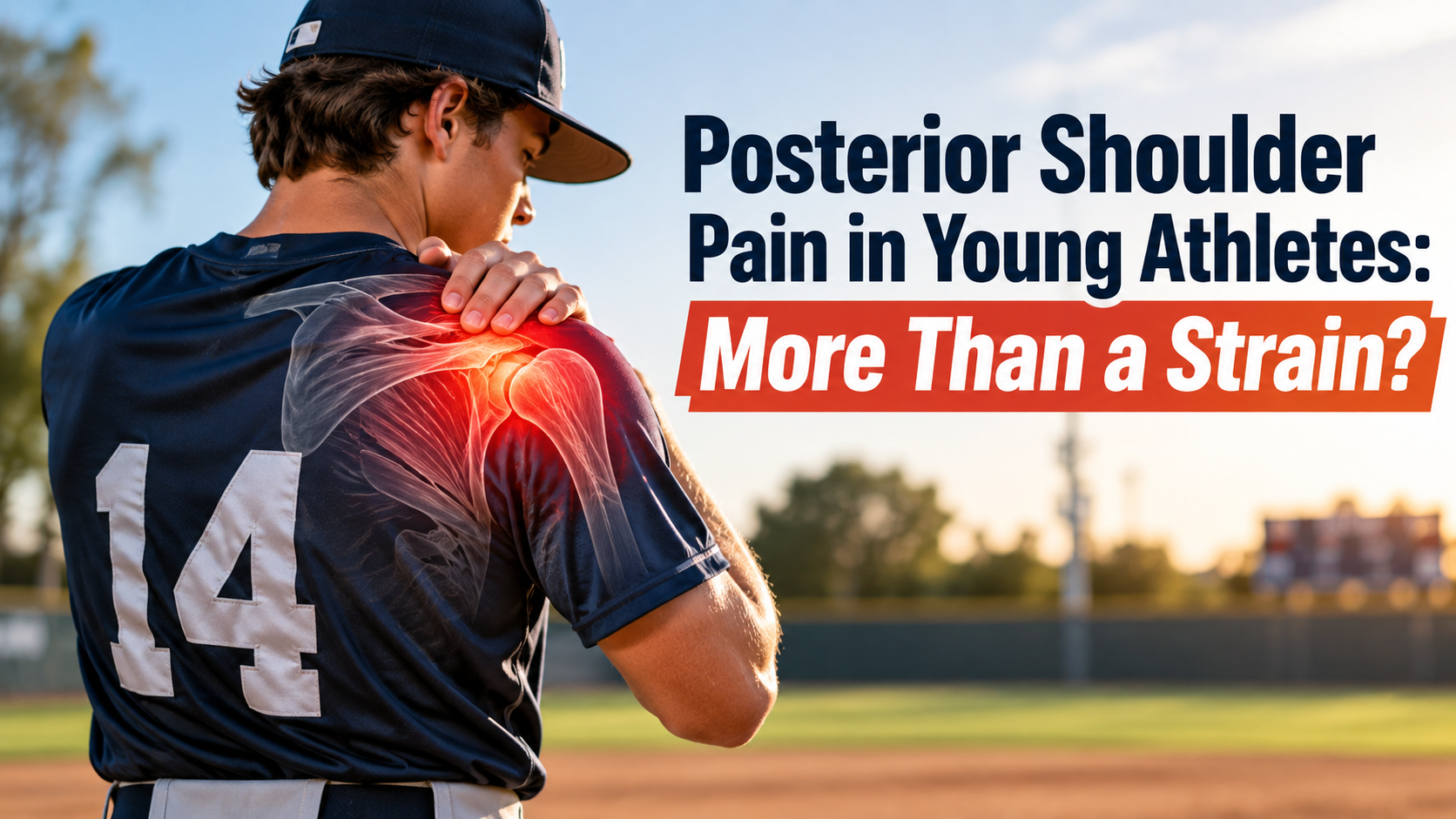
Posterior Shoulder Pain in Young Athletes: More Than a Strain?
Most posterior shoulder pain from throwing, batting, or overhead sports is a simple strain — but not always. Here's what to watch for and when it's worth a closer look.
Posterior shoulder or periscapular pain after a batting, throwing, or overhead motion usually is a muscle strain — but not always. A recent pediatric case report described a young softball player whose shoulder pain, initially treated as a simple strain, turned out to be a stress fracture of the first rib. It's an unusual case, but it's a good reminder that not every ache near the shoulder blade is what it first appears to be.
Why this kind of injury can be tricky
The muscles around the shoulder blade and the first rib sit close together, and pain from one can feel a lot like pain from the other. A young athlete who feels a sudden "pop" during a swing or throw, has tenderness near the inner edge of the shoulder blade, but still has full motion and strength, might reasonably be diagnosed with a periscapular strain. Standard shoulder X-rays don't always show the first rib well, so unless someone is specifically looking for it, a subtle fracture there can be missed on the initial read.
What tends to raise suspicion for something other than a garden-variety strain includes pain that doesn't fully resolve with rest, pain that returns as soon as the athlete goes back to their sport, or pain with deep breathing or coughing. None of these findings are exclusive to rib involvement, but they're worth mentioning to whoever is evaluating the injury.
This isn't just a youth sports issue
Stress injuries near the shoulder and shoulder blade show up in adults too, especially in racquet sports and pickleball, where repetitive overhead motion and quick directional changes put ongoing stress on the shoulder girdle. Most posterior shoulder pain in adult recreational athletes is still muscular or related to the rotator cuff, but the same principle applies: pain that doesn't improve as expected, or that keeps coming back with activity, deserves a closer look rather than another round of rest-and-hope.
If you play regularly in Southwest Florida's pickleball or tennis scene, you already know how easy it is to talk yourself into "it's probably nothing." Sometimes it is nothing. Sometimes it's worth a proper look at the shoulder and surrounding structures to rule out something that needs a different treatment plan.
How this typically gets sorted out
A careful history and exam usually points the way. Details that matter include exactly when the pain started, what motion caused it, whether there was a pop or click, whether pain changes with breathing, and how the pain responds to rest and to returning to activity. Depending on the exam, additional imaging beyond a standard X-ray may be needed to get a clear picture. For soft tissue and tendon problems, ultrasound-guided evaluation can also help pinpoint what's actually generating the pain.
In my clinic, I often see patients whose shoulder or periscapular pain hasn't followed the pattern you'd expect from a straightforward strain. When the story or the exam leaves any doubt — particularly if a stress injury to the rib or another bony structure is on the list of possibilities — an X-ray alone often isn't enough to settle the question. A physician may need an MRI for diagnosis, since it can pick up stress reactions and fractures that plain films tend to miss.
When to see a doctor
You don't need to overreact to every ache after a hard practice or a long match. But it's reasonable to get evaluated if any of the following apply:
Pain that hasn't meaningfully improved after a week or two of rest
Pain that returns as soon as you resume your sport
A distinct "pop" felt at the time of injury
Pain with deep breathing, coughing, or sneezing
Any weakness, numbness, or visible change in shoulder blade position
These don't automatically mean something serious is going on, but they're reasons to have someone take a more thorough look rather than assuming it will resolve on its own.
Common questions
Is a rib stress fracture common in shoulder pain cases?
No — it's uncommon. Most posterior shoulder and periscapular pain is muscular or related to the rotator cuff or shoulder blade mechanics. Rib involvement is worth considering mainly when pain doesn't follow the expected pattern of a simple strain.
Can this happen from pickleball or tennis, not just batting sports?
Repetitive overhead and rotational loading in any racquet sport can stress the shoulder girdle. While rib stress fractures specifically are rare in adult recreational players, persistent or recurring posterior shoulder pain is a reasonable thing to have checked regardless of the sport.
What does treatment usually involve if it is a rib stress fracture?
In most reported cases, treatment is conservative — rest from the aggravating activity, gradual return to sport, and attention to overall bone health. Surgery is generally not needed for a non-displaced stress fracture.
If you're dealing with shoulder or periscapular pain that isn't behaving the way you'd expect from a simple strain, it's worth getting it looked at properly. I offer same-day walk-in visits for exactly these kinds of questions — no need to wait weeks for an appointment. You can also request an appointment online to get started.
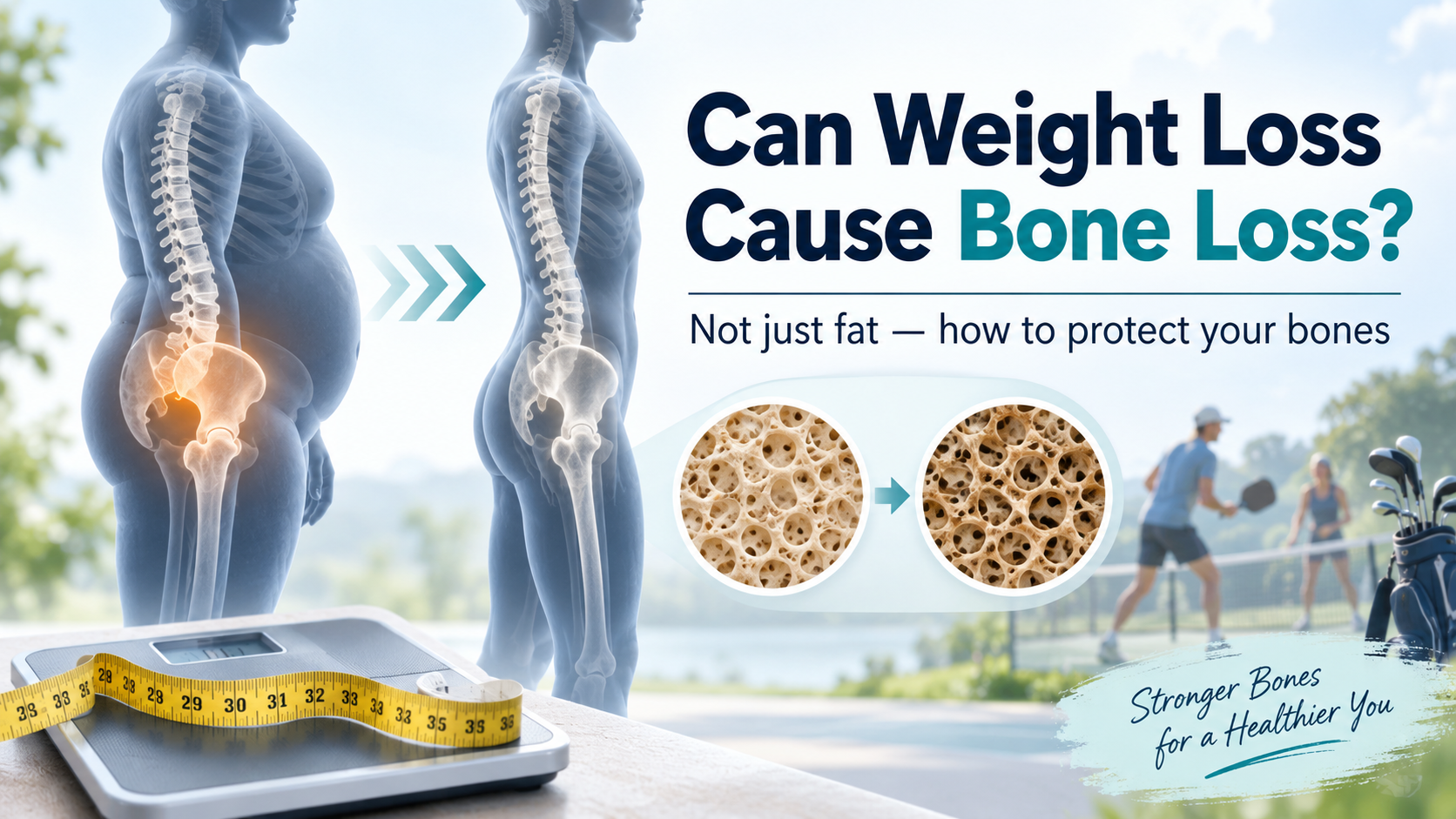
Losing Weight? Don't Forget About Your Bones
Weight loss doesn't just shrink fat, it can shrink bone too. Here's why that happens, who's most at risk, and what actually helps protect your skeleton.
Yes, weight loss can cause you to lose bone, not just fat. This happens with diet-based weight loss, with newer weight-loss medications, and after bariatric surgery. The amount of bone loss varies a lot from person to person, but there are real, practical steps that can reduce it.
Why does losing weight affect bone?
Bone is living tissue that constantly rebuilds itself, and that process is sensitive to how much you weigh, how much you eat, and how much load goes through your skeleton every day. When body weight drops, several things change at once: hormones that regulate bone turnover shift, the gut absorbs calcium less efficiently, and the mechanical load on weight-bearing bones is reduced simply because there is less body mass to carry. There is also growing interest in how the gut microbiome changes with weight loss and how that might affect bone indirectly. None of these mechanisms act alone, and researchers are still working out exactly how much each one contributes.
Who loses more bone during weight loss?
Not everyone loses bone at the same rate. In general, older adults and people who start out lean tend to lose more bone density during weight loss than younger or heavier individuals. The method matters too. Rapid, severe calorie restriction, whether from an aggressive diet, a newer incretin-based weight-loss medication, or bariatric surgery, tends to be associated with greater bone loss than slower, more moderate weight loss. This does not mean these treatments should be avoided; it means bone health deserves attention alongside the weight-loss plan, not as an afterthought.
This is relevant for a lot of active adults in Southwest Florida who are working on weight and fitness at the same time, especially those returning to pickleball or tennis after some time away. A body that is lighter but has weaker bones is not necessarily a body that is better protected from injury.
What actually helps protect bone during weight loss
The evidence here is still evolving, but a few strategies show up consistently as reasonable countermeasures:
Adequate protein and calcium intake during the weight-loss period, not just before or after it
Sufficient vitamin D, which supports calcium absorption
Weight-bearing and resistance exercise, which provides mechanical loading that bone needs to maintain itself
Not cutting calories too aggressively when it can be avoided, since slower weight loss tends to be gentler on bone
Some researchers are also studying whether osteoporosis medications or other targeted interventions could help preserve bone specifically during periods of weight loss, but this is an active area of research rather than settled practice. If you already have low bone density or osteoporosis, this is worth discussing before starting a significant weight-loss program.
In my clinic, I often see patients who are doing everything right with their weight-loss plan but have never actually had their bone health checked. We can screen patients for vitamin D deficiency and order a DXA scan to evaluate bone health directly, rather than guessing based on age or weight alone. That information helps us decide whether someone just needs better nutrition and more resistance training, or whether they need a more focused conversation about bone health and osteoporosis.
When to see a doctor
You do not need a bone scan every time you go on a diet. But you should talk to a physician about bone health if you are losing weight rapidly, using a weight-loss medication or considering bariatric surgery, are over 50, have a personal or family history of osteoporosis or fracture, or have noticed new joint pain, stress-fracture-type pain, or a change in how your joints feel during activity. This is also a good time for a broader evaluation if you are an active adult trying to get back into pickleball, tennis, or golf after weight loss and want to make sure your joints and bones can handle the return to sport. An evaluation can include a review of your history, a physical exam, and, when appropriate, imaging or bone density testing, along with guidance from our bone health resources.
Common questions
Does all weight loss cause bone loss?
Not necessarily to the same degree. Slower, moderate weight loss with good nutrition and regular exercise tends to be associated with less bone loss than rapid or severe calorie restriction. Individual factors like age, sex, and starting weight also matter.
Should I stop a weight-loss medication because of bone concerns?
That decision should be made with the prescribing physician, weighing the overall health benefits of weight loss against bone health. Bone loss is one factor among many, not necessarily a reason to stop treatment on its own.
Can exercise really protect bone during weight loss?
Weight-bearing and resistance exercise provide mechanical loading that bone needs, and current evidence supports it as one of the more reliable countermeasures during weight loss, alongside adequate protein and calcium intake.
If you are managing weight loss alongside joint pain, a return to sport, or concerns about bone health, our office offers same-day walk-in visits so these questions do not have to wait. You can also request an appointment to be evaluated directly.
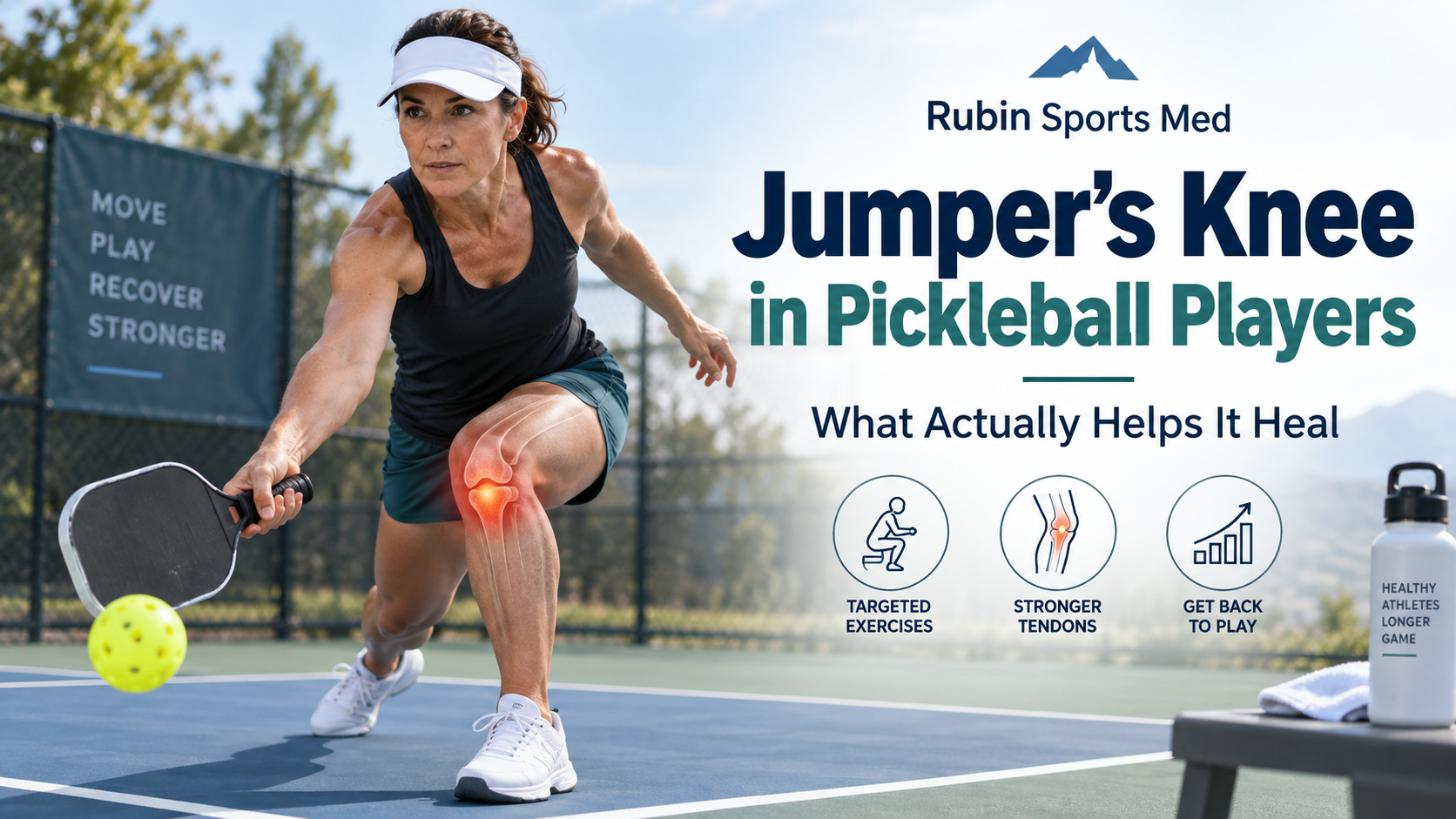
Jumper's Knee in Pickleball Players: What Actually Helps It Heal
Jumper's knee is a common overuse injury in Naples pickleball and tennis players. Here's what actually helps it heal, and when it's worth getting checked.
If you have an ache just below your kneecap that flares with jumping, lunging, or hard stops on the court, you likely have patellar tendinopathy, better known as jumper's knee. It's a wear-and-repair problem in the tendon, not usually a tear, and it responds well to the right loading program done consistently over weeks.
What jumper's knee actually is
The patellar tendon connects the kneecap to the shinbone and takes a huge load every time you decelerate, pivot, or jump. Repeated stress without enough recovery time leads to small changes in the tendon's structure. It thickens, loses some of its normal fiber organization, and becomes sensitive to load. This is different from arthritis or a meniscus tear, though the location can make people worry it's one of those. An exam, and sometimes an ultrasound, usually sorts it out quickly.
Why pickleball and tennis players get it
Sports with a lot of quick starts, stops, and directional changes put repeated eccentric load on the patellar tendon. In Southwest Florida, we see this often in players who ramp up court time quickly during the winter season, or who play daily without much variation in surface or intensity. Golfers can get a milder version from the deceleration phase of the swing, though it's less common there.
What rehab actually looks like
The backbone of treatment is a structured loading program, typically heavy, slow resistance or eccentric exercises done consistently over 8 to 12 weeks. This isn't rest and hope; tendons need progressive load to remodel. Many programs also include stretching of the surrounding muscles, and some clinics add adjuncts like shockwave therapy or manual work on the quadriceps and calf. Pain during exercise isn't automatically a red flag here, but pain that lingers for days afterward, or that worsens week over week, means the program needs adjusting.
What about supplements and other adjuncts
There's ongoing interest in whether things like creatine supplementation, taken alongside a structured rehab program, might support muscle and tendon recovery during return to play. This is an active area of research, and small studies are starting to look at it directly. The honest answer right now is that the evidence is preliminary and mixed across different supplements and populations. Creatine has a reasonably good safety profile in healthy adults, but it isn't a substitute for the loading program, and nobody should assume a supplement will shorten a timeline on its own. If you're considering adding one, it's worth discussing with whoever is managing your rehab so it fits into the overall plan and doesn't create false expectations.
In my clinic, I often see patients ask about creatine specifically, since it's so widely used for strength training. My honest take is that creatine can help you gain lean muscle mass, which may support the muscles around a healing tendon. But whether it does anything for the tendon itself, the part that's actually injured in jumper's knee, is still unknown. I don't discourage it if someone's already using it for general fitness, but I don't build a rehab plan around it either.
When to see a doctor
Most cases of jumper's knee improve with a properly loaded rehab program, but a few situations deserve an evaluation sooner rather than later:
Pain that's been present more than two to three weeks despite reducing court time
Swelling around the kneecap, or a sense of catching or locking
Pain that's sharp and sudden rather than a dull ache that builds with activity
Any case where you're not sure if this is tendon pain versus something like a meniscus issue or early arthritis
An exam and, when needed, an ultrasound-guided evaluation can confirm what's going on in the tendon and rule out other causes of anterior knee pain. For tendons that aren't responding to a standard loading program, options like PRP or other knee-directed procedures are sometimes considered, though these are decided case by case, not as a default next step.
Common questions
Should I stop playing pickleball completely?
Usually not entirely. Most rehab programs modify volume and intensity rather than eliminate activity, since some controlled loading helps the tendon adapt. An evaluation can help set a realistic playing schedule while you rehab.
Is this the same as a torn tendon?
No. Tendinopathy is a chronic overload and structural change in the tendon, while a tear is an acute disruption of the tendon fibers. They're managed differently, which is part of why getting an accurate diagnosis matters.
How long does recovery typically take?
Structured rehab programs for patellar tendinopathy are often measured in months, not days, with gradual increases in load. Everyone's timeline differs based on how long symptoms have been present and how the tendon responds to loading.
If knee pain is limiting your game, you don't need to wait weeks for an appointment. We offer same-day walk-in visits for active adults across Naples and Southwest Florida, or you can request an appointment to get a clear diagnosis and a plan.